Cybersecurity Awareness Month 2026
Why Security Starts with Your Infrastructure
Every October, Cybersecurity Awareness Month provides an opportunity for organizations to step back and look at how they are protecting the systems, applications, and data they depend on every day.
But cybersecurity in 2026 looks very different from even a few years ago. Threat actors are moving faster. Vulnerabilities are being exposed more quickly. Ransomware continues to disrupt organizations across industries. Third-party relationships are expanding the attack surface. Artificial intelligence (AI) gives attackers new ways to automate, scale, and personalize their operations.
At the same time, organizations are becoming increasingly dependent on complex digital infrastructure. The result? Cybersecurity can no longer be treated as a collection of products added around a generic environment. It has to be considered part of how that environment is designed, operated, monitored, and maintained.
The Cybersecurity Landscape is Changing
Cybersecurity isn’t just an IT concern — it deserves attention at every level of an organization. Verizon’s 2026 Data Breach Investigations Report investigated real-world security incidents and found that 31% of breaches now begin with the exploitation of software vulnerabilities. For a long time, stolen credentials were the leading initial access vector, so this shift is significant.
For years, cybersecurity awareness has understandably focused heavily on passwords, phishing, and user behavior. Those areas remain important, but today’s threat landscape demonstrates that attackers are increasingly targeting the technology itself.
Ransomware also remains a major concern. Verizon’s report found ransomware present in 48% of breaches. Another concern is that the attack surface continues to expand beyond an organization’s own environment. Modern businesses rely on cloud platforms, software vendors, integrations, partners, remote workers, APIs, and other third parties. Each connection introduces additional risk. Verizon’s report highlights the significant growth in third-party and supply-chain-related exposure.
In the evolving cybersecurity landscape, protecting your network perimeter is no longer enough to keep your organization safe.
The Threats of Tomorrow
AI adds another layer to the challenge. Organizations are adopting AI to improve productivity, analyze data, automate workflows, and build new products. However, threat actors are also using AI to accelerate their own operations. Verizon’s report found that generative AI is being used to enhance 15% of attack techniques, while IBM’s 2026 Cost of a Data Breach Report found that there has been a 56% increase in AI-driven attacks.
AI can help attackers identify vulnerabilities, generate malicious content improve social engineering, automate parts of an attack, and move more quickly once access has been obtained. Copy Fail is a recent example of threat actors leveraging AI to automate and accelerate malicious activities that previously required significant time and resources.
This creates an important shift in cybersecurity thinking. The question is no longer simply whether an organization can detect an attack.
It is whether its infrastructure can withstand an environment where attacks can move at machine speed.
Post-Quantum Security Is on Its Way
Leaders in technology are actively racing to develop quantum computing. When quantum computers become powerful enough, today’s encryption standards won’t be enough to protect your data. Attackers are already stealing encrypted data to store until quantum computers are capable of decrypting the data. Organizations must start preparing now for post-quantum encryption standards.
The Cost of Lackluster Security
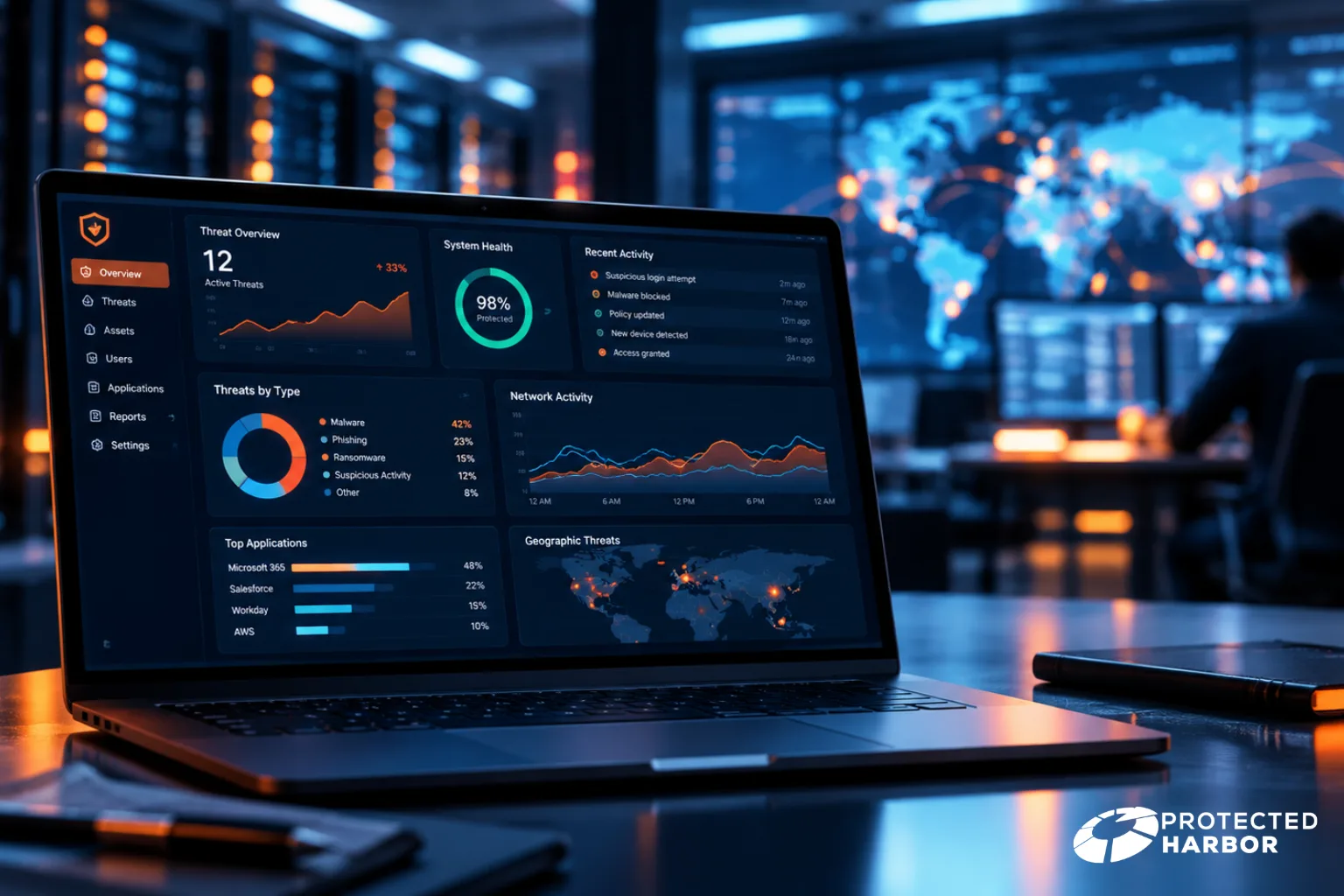
The consequences of a cyberattack extend well beyond compromised credentials or stolen information. A successful attack can interrupt operations for extended periods of time, prevent employees from accessing critical applications, expose sensitive information, hurt revenue, damage customer trust, and lead to regulatory and/or legal consequences.
According to IBM’s report, the global average cost of a data breach stands at $4.99 million — a 12% increase compared to last year and a record high. For organizations operating in highly regulated industries, the financial impact can be even greater. For example, IBM reports an average healthcare breach cost of $6.64 million in 2026.
Infrastructure failures affect much more than data. For healthcare organizations, it can interfere with access to applications, imaging systems, patient information, scheduling platforms, and other systems employees depend on to do their jobs. For a SaaS company, an infrastructure security incident can become a customer-facing availability and trust issue. For a logistics organization, an application disruption can affect the movement of shipments and the systems that coordinate them. Cybersecurity and business continuity are increasingly connected.
Why Security Products Alone Are Not Enough
Firewalls, endpoint protection, identity controls, vulnerability scanners, monitoring platforms, backup systems, intrusion detection, encryption, and other technologies all still have an important role to play. But having security tools does not automatically mean an organization is secure.
Tools operate within an environment. That environment still needs to be properly designed, configured, monitored, maintained, and understood.
A vulnerability scanner can identify a weakness. A firewall can block a connection. A monitoring platform can generate an alert. But someone, or something, still needs to understand what that information means in the context of your organization. This is where Secure by Design becoming increasingly important.
What Does Secure by Design Mean?
Secure by Design means considering security from the beginning rather than attempting to add it after systems have already been built and deployed. Security becomes part of the architecture, development, configuration, deployment, and operational lifecycle.
That means asking questions such as:
- What applications are most critical to the business?
- What infrastructure do those applications depend on?
- Where are the organization's most important data and systems located?
- What would happen if a critical component became unavailable?
- Which vulnerabilities represent the greatest operational risk?
- What third parties and integrations have access to the environment?
- How quickly can suspicious activity be identified?
- What happens when a security control fails?
- Who is responsible for responding?
These questions move cybersecurity beyond worrying about how many security products you have to how secure the environment is as a whole.
An Application-Aware Approach to Security
Infrastructure does not exist in isolation. Applications depend on databases, operating systems, networks, storage, compute resources, integrations, authentication systems, and countless other components. A change in one layer can affect another.
That is why cybersecurity becomes much more effective when security teams and infrastructure teams understand how the technology actually supports the business. An Application-Aware approach considers the relationships between applications, infrastructure, data, users, security, and business operations.
This creates a more complete picture of risk. Instead of simply identifying a vulnerability, organizations can begin asking: What does this system support? How exposed is it? What would happen if it were compromised? How quickly could we detect and contain the problem?
That context matters.
7 Tips for Building a Stronger Cybersecurity Foundation
There is no single technology that can eliminate cyber risk. Therefore, a resilient cybersecurity strategy requires multiple layers working together. If one layer of protection does down, you’ll still have others working to prevent an incident from becoming a disaster.
1. Understand Your Attack Surface
Organizations should know what systems, applications, devices, users, vendors, and integrations exist within their environment. You cannot effectively protect what you do not understand.
2. Prioritize Vulnerabilities Based on Risk
Not every vulnerability represents the same level of business risk. Organizations should consider factors such as exposure, exploitability, application criticality, sensitive data, and potential operational impact when prioritizing remediation. The goal should be to reduce meaningful risk by starting with the vulnerabilities that are the most critical.
3. Design Security into the Foundation
As we have mentioned, security must be prioritized at the start, not treated as an afterthought. If security is not built in at the beginning, not only does this increase your risk, but trying to fix your security after scaling is exponentially more expensive.
4. Monitor Continuously
Environments change. Applications change. Vulnerabilities emerge. Employees change roles. Vendors introduce new integrations. Attack techniques evolve. Continuous monitoring provides the visibility needed to identify abnormal behavior and respond before a small issue can become a major incident.
5. Prepare for Failure
Even strongest security measures cannot guarantee that an organization will never experience an incident. This means that resilience is extremely important. Organizations must know how they will detect, contain, recover from, and learn from a cybersecurity incident. Backups, disaster recovery, incident response planning, and clearly defined responsibilities all contribute to that resilience.
6. Establish Accountability
One of the most important cybersecurity questions is also one of the simplest: Who owns the outcome? When responsibility is divided across numerous tools, vendors, teams, and platforms, gaps develop. Effective cybersecurity requires clearly defined ownership.
7. Trust Nothing, Verify Everything
Adopting Zero Trust principles is absolutely essential in today’s cybersecurity landscape. Once upon a time, if users and systems were inside of the network, they could generally be trusted. Security is no longer that simple. Zero Trust protects your environment by continuously validating user identity, device posture, access permissions, behavioral anomalies, and session integrity.

Cybersecurity Is Everyone’s Responsibility
Security awareness is essential at every level of your organization. Employees should understand how to recognize phishing, use strong authentication, protect credentials, report suspicious activity, and handle sensitive information responsibly. But cybersecurity cannot rest entirely on the individual employee.
People make mistakes. Systems can be misconfigured. Software can contain vulnerabilities. Vendors can be compromised. Attackers will discover new techniques. A resilient organization assumes that something eventually will go wrong and designs its environment accordingly.
That means building layers of protection, maintaining visibility, reducing unnecessary exposure, and ensuring that the infrastructure supporting critical applications is designed with security and resilience in mind.
Moving From Security Tools to Security Architecture
Cybersecurity Awareness Month is an opportunity to look beyond the tools your organization has purchased and ask whether those tools are working together as part of a broader security strategy.
The modern threat landscape demands more than perimeter protection. It requires organizations to understand their applications, infrastructure, data, users, vendors, vulnerabilities, and dependencies as parts of one connected environment.
Security should not be something added to infrastructure. Security should be part of the infrastructure.
At Protected Harbor, this principle is central to our Application-Aware Infrastructure model. By understanding the applications our clients depend on and the infrastructure supporting them, we approach performance, availability, security, and accountability as interconnected pieces of the same puzzle. Because in 2026, cybersecurity is not simply about having more security products. It is about building an environment that is designed to be secure, monitored to remain secure, and supported by people who understand what is at stake.
Cybersecurity Awareness Month: A Reminder to Start with the Foundation
Cyber threats will continue to evolve and no security strategy is absolutely foolproof. The goal should not be to build an environment that assumes threats will never get through. The goal is to build an environment that is prepared for when they do. That starts with understanding what you have, knowing what matters most, designing security into the architecture, continuously monitoring the environment, and establishing clear accountability.
Do you want a better understanding of where your environment stands today — and what it will take to prepare for what’s next?
Contact Protected Harbor for a complimentary Infrastructure Security Audit. We will evaluate your environment and identify:
- Areas of vulnerability
- Cyberattack blast radius and exposure points
- Performance bottlenecks tied to infrastructure design
- Security gaps impacting availability and resilience
- Legacy systems creating operational risk
- Opportunities to improve scalability, reliability, and performance
No obligation — just clarity on where you stand.