Cybersecurity for Transportation & Logistics
Cybersecurity for WMS, TMS, & OMS
When Logistics Systems Go Down, Business Doesn’t Stop
Modern logistics depends on connected technology. Warehouse Management Systems (WMS) coordinate inventory and fulfillment. Transportation Management Systems (TMS) help manage carriers, routing, and shipments. Order Management Systems (OMS) connect orders, inventory, and customer fulfillment across channels. These platforms are essential to keeping goods moving, but their interconnected nature also creates cybersecurity challenges that extend beyond any single application.
A compromised account could expose sensitive shipment data. A ransomware incident could make critical systems unavailable. A vulnerability in a third-party integration could provide an attacker with access to connected infrastructure. Even a relatively small security incident can create a much larger operational problem when systems depend on one another to function. For logistics providers, distributors, manufacturers, and transportation companies, cybersecurity is no longer just about protecting information. It is about maintaining operational continuity, protecting business relationships, and ensuring the technology behind the supply chain remains reliable.
So when it comes to cybersecurity for WMS, TMS, and OMS, where should you start?
The answer isn’t necessarily to purchase another security tool or overhaul your entire technology environment. Organizations should start by understanding which systems their business depend on, how those systems connect, and what happens when something goes wrong.
Why These Platforms Present Unique Cybersecurity Risks
The transportation and logistics industry has become an increasingly attractive target for cybercriminals. To keep goods moving, organizations must depend on time-sensitive operations, interconnected digital systems, and real-time data. While these technologies enable greater efficiency and visibility, they also create a complex attack surface that cybercriminals can exploit to disrupt operations, compromise sensitive information, and impact the broader supply chain.
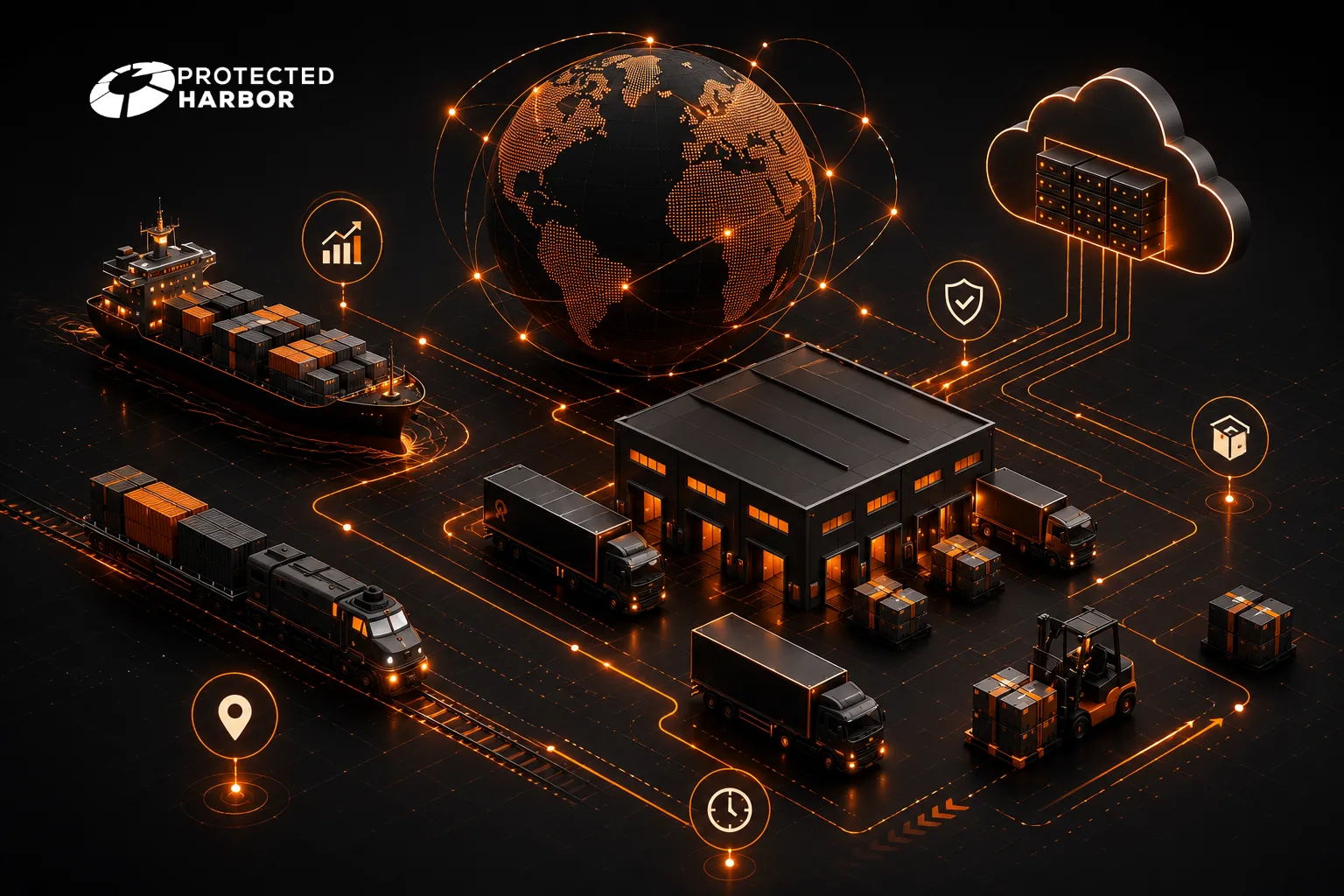
WMS, TMS, and OMS platforms don’t operate in isolation. They exchange information with ERP systems, e-commerce platforms, carriers, warehouse equipment, customer portals, payment services, cloud environments, and third-party logistics providers. Each connection helps the business operate more efficiently. However, each connection can also introduce another dependency that must be secured.
Warehouse Management Systems (WMS)
WMS platforms coordinate inventory visibility, picking, packing, receiving, and fulfillment workflows. Depending on the environment, they may also connect to barcode scanners, handheld devices, warehouse automation, and other operational systems. A cyber incident affecting a WMS could disrupt inventory accuracy, delay fulfillment, or interfere with warehouse operations. If the system becomes unavailable, employees may struggle to determine what is in stock, where products are located, or which orders need to be processed.
Transportation Management Systems (TMS)
TMS platforms support shipment planning, carrier coordination, routing, freight management, and transportation visibility. A compromised TMS could expose sensitive shipping information, interfere with dispatching workflows, or prevent teams from accessing the information they need to coordinate deliveries. Depending on the integrations involved, the consequences could extend to carriers, customers, and other logistics partners.
Order Management Systems (OMS)
OMS platforms help businesses coordinate orders across sales channels, inventory sources, fulfillment locations, and delivery processes. If an OMS is compromised or unavailable, organizations may experience order-processing delays, inaccurate inventory information, fulfillment errors, or disruptions to customer communications.
The Bigger Problem: Interconnected Systems
The greatest risk may not be any one platform. It may be the dependencies between them. For example, an order management platform might rely on inventory data from a WMS and shipment updates from a TMS. If one system becomes unavailable, the effects can spread across the entire workflow. This is why cybersecurity for WMS, TMS, and OMS platforms requires a broader infrastructure perspective. Protecting the applications matters, but so does protecting the environments, integrations, identities, networks, and services that allow them to operate.
Cybersecurity Threats Logistics Companies Should Prioritize
Understanding the threats that matter most is the first step toward building a more effective security strategy.
1. Ransomware & Operational Disruption
Ransomware remains a significant concern for organizations that depend on continuously available business systems. Verizon’s 2026 Data Breach Investigations Report found ransomware present in 48% of breaches. IBM’s 2026 Cost of a Data Breach Report also found that 41% of ransomware attacks now include threats to brand reputation. They highlighted the concern that attacks are moving “away from purely technical disruption toward multilayered extortion strategies that target trust, public perception, and long-term business impact.” In 2017, Maersk, the largest global oceangoing shipping company, had their operations brought to a halt by ransomware. The organization lost $300 million from the attack.
An attack may encrypt critical data, disrupt application access, compromise connected systems, or force operations to rely on manual processes while recovery takes place. For a warehouse or transportation operation, downtime can create a cascading series of problems: delayed shipments, missed delivery windows, backlogs, customer service issues, and pressure on employees to find workarounds. The impact also depends on the environment. A company with reliable recovery procedures and isolated backups may be better positioned to restore operations than one whose backups, administrative accounts, and production systems share the same vulnerable environment.
Where to start: Identify which applications and infrastructure components are essential to keeping operations running. Establish recovery priorities, verify that backups can be restored, and determine how critical workflows would continue during an outage.
2. Third-Party & Software Supply Chain Vulnerabilities
Logistics organizations rely on a broad ecosystem of technology vendors, SaaS providers, integration partners, managed service providers, and transportation partners. These relationships introduce risk when a trusted provider is compromised or a vulnerability affects software used across multiple organizations. An attacker doesn’t always need to breach a logistics company directly. They may exploit a vendor account, compromised software update, exposed integration, or poorly secured remote connection to gain access to a target environment.
The 2020 SolarWinds incident demonstrated how a compromised software distribution process can affect numerous downstream organizations. While that incident was not specific to logistics, the underlying lesson applies to any industry that relies on trusted technology providers. For logistics businesses, the practical concern is broader than software alone. Third-party access to infrastructure, shared credentials, API connections, and remote support tools can all create potential paths into critical systems.
Where to start: Build an inventory of critical vendors and integrations. Document what each provider can access, what business processes depend on that relationship, and how access would be revoked if a compromise were suspected. The National Institute of Standards and Technology (NIST)’s Cybersecurity Framework 2.0 Quick-Start Guide for Cybersecurity Supply Chain Risk Management providers a useful foundation for establishing supplier risk management practices.
3. Compromised Credentials & Excessive Access
A legitimate account can become a security vulnerability when it is stolen, misused, or granted more access than necessary. In 2025, a 158-year-old logistics company was forced to close after a ransomware attack. The attackers managed to guess a single password, gain access, encrypt critical data (including backups and disaster recovery systems), and the company was unable to pay the ransom.
Logistics environments may include employees, contractors, warehouse personnel, application administrators, vendors, and external support teams. Each group has different responsibilities and should have access appropriate to its role. If an attacker compromises a privileged account, they may be able to access sensitive data, change configurations, create additional accounts, or move between connected systems. The challenge becomes more serious when organizations rely on shared administrative credentials, leave former vendor accounts active, or allow broad access across environments.
Where to start: Require multi-factor authentication (MFA), prioritize phishing-resistant MFA for high-risk access where feasible, eliminate unnecessary privileges, and review administrative and third-party accounts regularly. Apply the principle of least privilege: users and services should only receive the permissions they absolutely need to perform their intended functions — nothing more.
4. Insecure Integrations & Exposed APIs
WMS, TMS, and OMS platforms frequently exchange data through APIs, middleware, EDI connections, and other integrations. These connections can become overlooked security gaps, particularly when they are deployed quickly to support new business requirements or remain in place long after their original purpose has changed. An exposed API, improperly managed service credential, or overly permissive integration could allow unauthorized access to order records, inventory data, shipment details, or other connected systems. Integrations also create dependencies that can complicate incident response. Disabling a connection may reduce risk, but it could also interrupt an important operational workflow.
Where to start: Inventory integrations and their owners. Review authentication, permissions, credential storage, logging, and data exposure. Establish a process for reviewing integrations before deployment and removing those that are no longer needed. Security decisions should account for both the risk of leaving a connection exposed and the operational consequences of changing it.
5. Limited Visibility Across Applications & Infrastructure
Organizations cannot reliably protect systems they do not fully understand. In complex logistics environments, application management, cloud hosting, network administration, endpoint security, and vendor support may be handled by different teams or providers. This fragmentation can make it difficult to determine which systems communicate, who is responsible for securing them, and where suspicious activity should be investigated. A security alert may identify an unusual login or network connection without immediately revealing its operational significance. Conversely, an application issue might appear to be a routine outage when it is actually connected to a security incident.
Where to start: Map critical applications, infrastructure dependencies, data flows, and external connections. Centralize relevant logs where practical, monitor for unusual activity, and establish clear ownership for investigating and resolving incidents. The objective is not to simply collect more alerts. It is to develop enough visibility to understand what is happening, why it matters, and what action to take.
Where Should You Start? A Practical Cybersecurity Roadmap
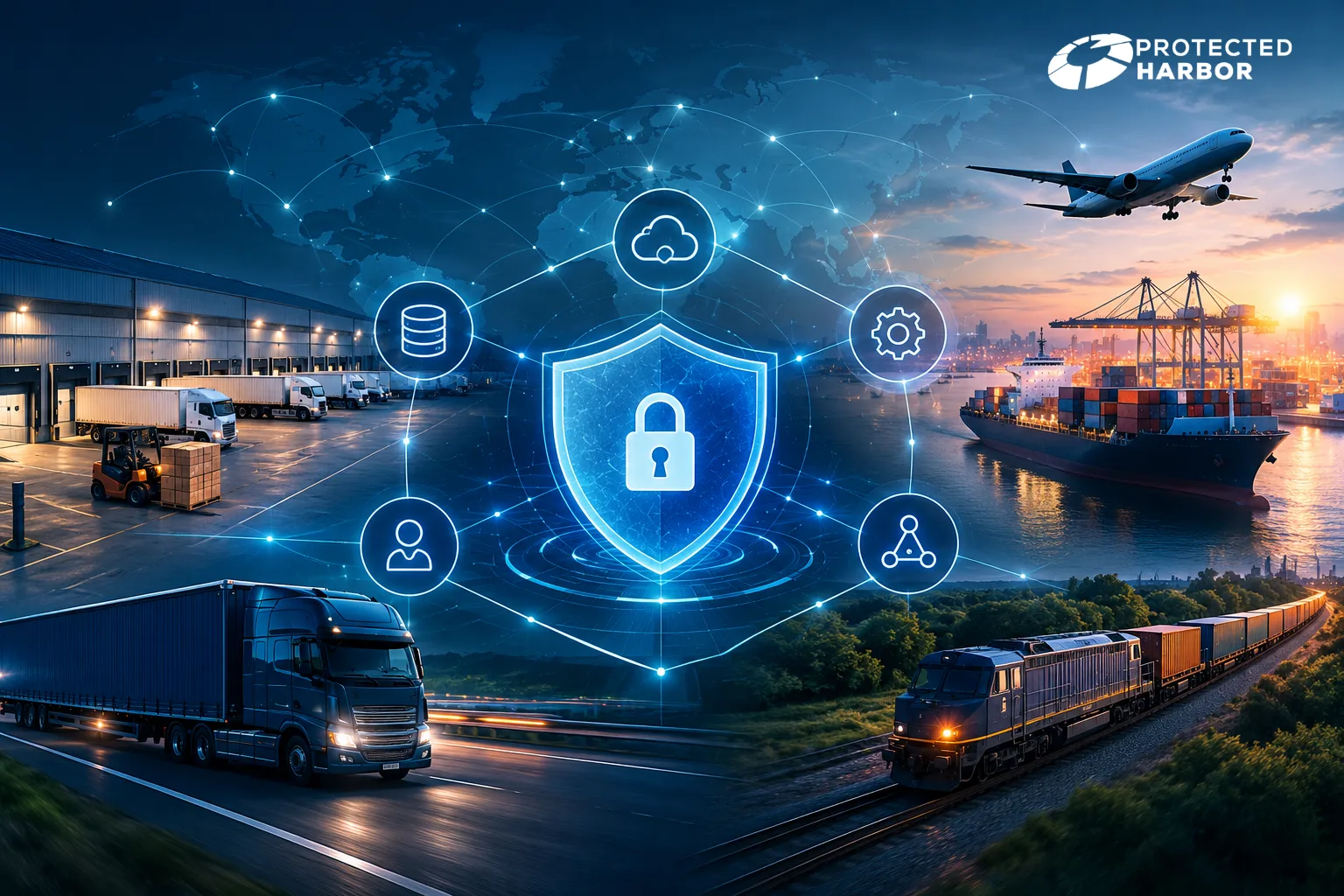
With so many potential vulnerabilities, it can be tempting to address every issue at once. In practice, a prioritized approach is often more effective. The following roadmap offers a starting point for organizations securing WMS, TMS, and OMS environments.
Step 1: Identify Your Most Critical Systems & Dependencies
Begin with an operational inventory rather than a list of security products. Identify your WMS, TMS, and OMS platforms, along with the infrastructure and services they depend on. Include cloud environments, databases, identity providers, network connections, integrations, endpoints, backup systems, and third-party support arrangements. Then ask:
- Which systems are essential to daily operations?
- What happens if one becomes unavailable for several hours or several days?
- Which applications exchange sensitive data?
- Which systems have privileged access to other environments?
- Who is responsible for maintaining and securing each component?
Use these answers to prioritize your highest-impact risks. A system that supports a critical fulfillment workflow may warrant more immediate attention than an application with limited operational impact, even if both have technical vulnerabilities.
Step 2: Secure Identities & Third-Party Access
Once you understand your environment, examine how people, applications, and external providers gain access to it. Prioritize:
- Enforcing MFA, especially for administrative, remote, and vendor access.
- Removing unused accounts and outdated permissions.
- Replacing shared credentials with individually attributable access where possible.
- Restricting vendor access to approved systems and necessary time periods.
- Protecting service accounts, API credentials, and other nonhuman identities.
- Reviewing privileged access and monitoring unusual account activity.
These measures help reduce the likelihood that a compromised account becomes a pathway into critical infrastructure. They also support a Zero Trust approach: access should be explicitly authorized and continually evaluated according to risk, rather than automatically trusted because a user or system is already inside a network.
Step 3: Segment Your Environment to Limit the Impact of an Attack
Network segmentation helps prevent a compromise in one part of an environment from spreading freely to other systems. For example, a logistics organization may need to separate administrative IT resources, production application environments, warehouse devices, and operational technology where present. The appropriate design depends on your architecture and operational requirements. The goal is to control communication between systems and ensure that access to one environment does not automatically provide access to everything else.
Segmentation should be paired with appropriate identity controls, monitoring, and configuration management. Simply creating separate network zones is not enough if broad permissions or unrestricted connections undermine those boundaries. Importantly, changes must be tested against real workflows. An overly restrictive rule could interrupt communication between a WMS and a fulfillment system just as surely as a technical failure could. The goal is controlled connectivity, not disconnected operations.
Step 4: Build Resilience into Your Infrastructure
Prevention matters, but no security strategy can guarantee that every incident will be stopped. Organizations should prepare for the possibility that a critical application, infrastructure component, or service provider becomes unavailable. This means looking beyond whether backups exist and asking whether the business can recover from a realistic failure scenario. Consider:
- Maintaining protected backups and testing restoration procedures.
- Defining recovery time objectives (RTOs) and recovery point objectives (RPOs) for critical systems.
- Documenting application dependencies and recovery sequences.
- Establishing incident response procedures and decision-making responsibilities.
- Identifying manual workarounds for essential workflows.
- Evaluating alternate connectivity, hosting, or service arrangements where justified by business risk.
Recovery planning should reflect actual operational priorities. Restoring a database is not necessarily the same as restoring the complete order-to-delivery workflow. For example, a WMS may be technically available again, but warehouse operations could remain disrupted if authentication, network connectivity, integrations, or inventory data have not been restored.
Step 5: Evaluate the Security of the Entire Technology Supply Chain
Your organization's risk extends beyond systems it owns and directly manages. Cloud hosting providers, SaaS vendors, managed service providers, software suppliers, integration partners, and other external organizations can all influence your security posture. Third-party risk management should be an ongoing process, not a one-time questionnaire completed during procurement.
Evaluate providers according to the sensitivity of the data they handle, the access they receive, and the operational consequences of their failure. Useful questions include:
- What security controls protect the service?
- How is privileged access managed and monitored?
- How are vulnerabilities identified and remediated?
- What happens if the provider experiences a security incident?
- How quickly will the provider notify affected customers?
- How will your organization maintain operations or recover if the service becomes unavailable?
- Can access be restricted or revoked without creating unnecessary operational disruption?
NIST's supply chain risk management guidance provides a structured way to establish expectations for suppliers and incorporate cybersecurity into ongoing vendor relationships.
Step 6: Monitor, Test, & Continuously Improve
Cybersecurity is not a project with a permanent finish line. Infrastructure changes, new integrations, software updates, acquisitions, and evolving business requirements can introduce risks that were not present during an earlier assessment. Organizations should continuously evaluate their security posture through vulnerability management, access reviews, log monitoring, incident exercises, recovery testing, and periodic risk assessments. Testing should also reflect the interconnected nature of logistics systems. A tabletop exercise might examine how a ransomware incident affecting a WMS would affect order processing, transportation coordination, customer communications, and recovery priorities. These exercises help teams identify gaps before an actual incident forces them to respond under pressure.

Application Security Is Only Part of the Equation
One of the most important distinctions for logistics organizations is the difference between securing an application and securing the environment that supports it. A WMS, TMS, or OMS provider may maintain strong security controls within its own software. That does not automatically secure the identity systems, network connections, databases, hosting infrastructure, endpoints, and third-party integrations surrounding the application. Likewise, a company may invest in firewalls, endpoint protection, and monitoring tools without having a clear understanding of how its critical applications depend on those controls. Both situations can leave important gaps.
Effective cybersecurity requires alignment between application requirements and infrastructure design. That means understanding how an application needs to communicate, what resources it requires, which users and services should have access, how its data should be protected, and what must happen when a dependency fails. This is particularly important in logistics, where security controls must protect critical systems without introducing unnecessary friction into time-sensitive workflows. The objective is not to choose between security and operational efficiency. It is to engineer an environment that supports both.
The Application-Aware Perspective
Application-Aware Infrastructure is the belief that infrastructure should be designed and managed around the actual requirements of the applications it supports. This means looking beyond individual servers, networks, or security products to understand how the full environment functions as a connected system.
Consider a transportation management platform that relies on a database, identity provider, cloud-hosted application, carrier integrations, and external connectivity. Protecting that platform requires more than securing each component independently. The organization needs to understand the relationships between them, control how they communicate, monitor the environment for suspicious activity, and plan for failures that could affect the complete workflow.
An Application-Aware approach can help organizations:
- Align security controls with application dependencies and business priorities.
- Identify critical connections and unnecessary access paths.
- Coordinate infrastructure changes with application requirements.
- Improve visibility across interconnected systems.
- Plan recovery around business workflows rather than isolated components.
- Establish clearer accountability for the infrastructure supporting critical applications.
For logistics businesses, this perspective helps connect cybersecurity investments to outcomes that matter: more reliable operations, reduced exposure, improved recovery readiness, and fewer avoidable disruptions.
Protect the Systems That Keep Your Business Moving
Securing logistics platforms is not simply a matter of deploying more security tools. It requires a clear understanding of the applications that support your operations, the infrastructure they depend on, and the risks introduced by every connection in the environment. Start by identifying critical systems and dependencies. Secure identities and third-party access. Limit unnecessary connectivity. Validate your recovery capabilities. Then build a continuous process for monitoring, testing, and improving your security posture. Most importantly, recognize that application security and infrastructure security cannot operate independently. When the systems that coordinate inventory, orders, and transportation are interconnected, the environment supporting them must be designed with those relationships in mind.
At Protected Harbor, our Application-Aware Infrastructure approach helps organizations think more holistically about the hosting, security, networking, and operational foundations their critical applications require. If your organization depends on WMS, TMS, or OMS platforms to keep goods moving, now is the time to evaluate whether your infrastructure is prepared to protect those systems and support recovery when disruptions occur. Contact Protected Harbor to discuss how a more integrated approach to infrastructure, security, and operational resilience can help protect your business.